


knowledge base: the blog
From PCOS to PMOS: Why Renaming Matters for Women’s Hormonal Health

by Dr Nirusha Kumaran
May 12, 2026
From PCOS to PMOS: Why Renaming Matters for Women’s Hormonal Health
If you’ve ever received a diagnosis of polycystic ovary syndrome (PCOS), you may have felt a mix of relief and confusion. Relief at finally having a name for irregular cycles, unwanted hair growth, acne, or weight struggles. Confusion because an ultrasound showed “cysts” that didn’t fully explain your fatigue, sugar cravings, or family history of diabetes.
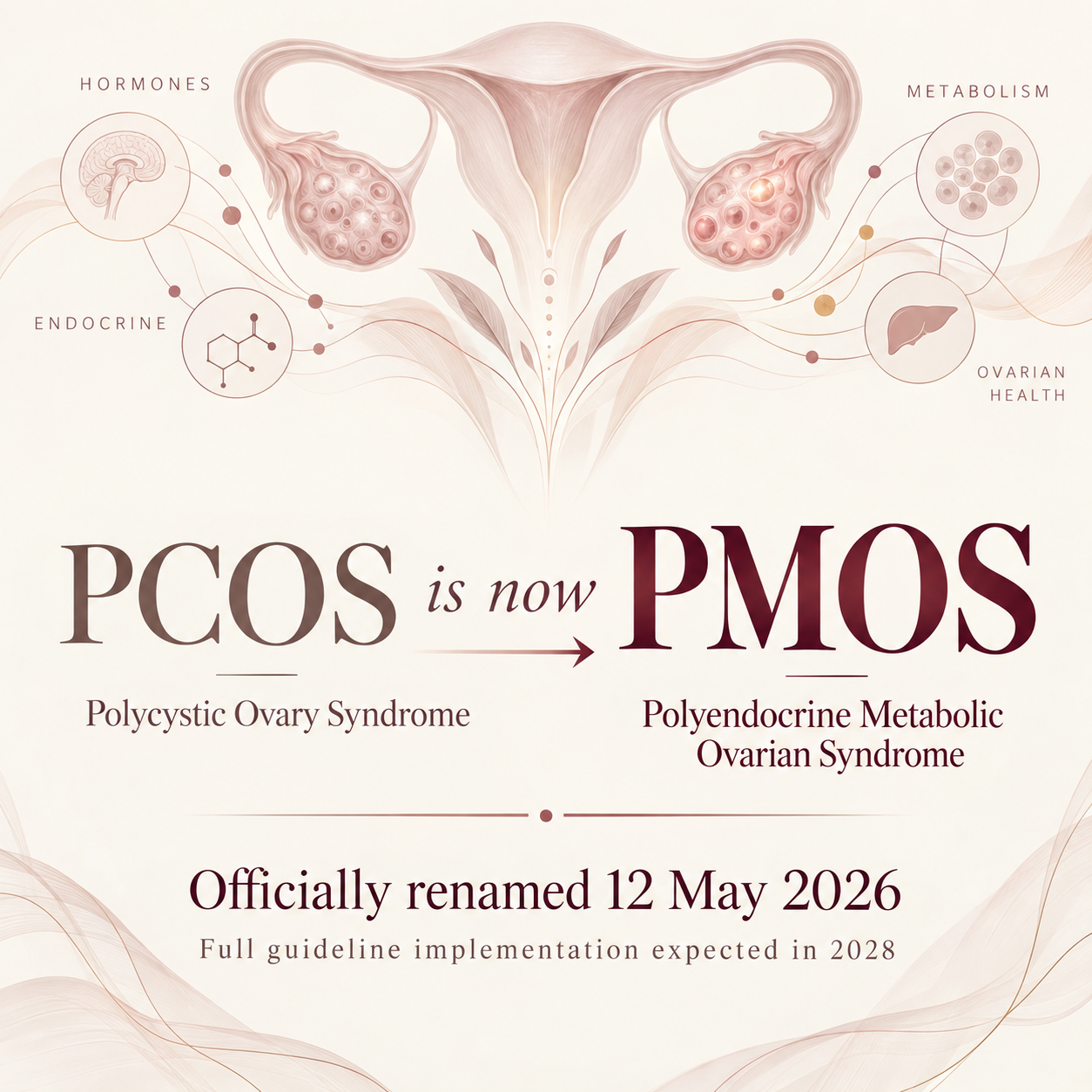
You’re not alone. Clinicians and researchers are increasingly recognising that the name “PCOS” itself can be misleading - and a proposed shift toward PMOS (PolyMetabolic Ovary Syndrome) aims to better reflect the true nature of this common condition. This change is more than semantics. It has the potential to transform how we diagnose, treat, and empower women across the lifespan.
Why “PCOS” No Longer Fits
PCOS affects roughly 8–13% of reproductive-age women and is one of the most common endocrine disorders worldwide. Yet its name emphasises polycystic ovarian morphology—the appearance of multiple small follicles on ultrasound—while downplaying the broader picture.
Many women diagnosed with PCOS do not have classic cysts. Conversely, polycystic-appearing ovaries can occur in women without the syndrome. The real drivers are often upstream: insulin resistance, chronic low-grade inflammation, androgen excess, and disrupted communication between the brain, ovaries, and metabolic systems.
Diagnostic criteria have evolved (NIH 1990, Rotterdam 2003, AE-PCOS 2006, and the 2018 International Evidence-Based Guideline), yet the name has lagged behind. The focus on “cysts” can lead patients and even some clinicians to view PCOS as primarily a gynecologic or fertility issue rather than a lifelong metabolic-endocrine condition with implications for heart health, diabetes risk, mental well-being, and healthy aging.
This mismatch contributes to delayed diagnosis, fragmented care, and a sense that “it’s just about the ovaries.”
What PMOS Stands For—and Why the Change Makes Sense
PMOS stands for PolyMetabolic Ovary Syndrome.
The proposed name keeps the familiar “ovary” reference for continuity while placing metabolic features front and center. “Poly” acknowledges the multiple, interconnected pathways involved—insulin signaling, androgen production, inflammation, gut-brain-ovary axis, and more—rather than a single cystic finding.
Rationale behind the shift includes:
- Reducing the misconception that ovaries must look polycystic for the diagnosis to be valid.
- Highlighting insulin resistance and metabolic dysfunction as core (not secondary) features, present even in lean women.
- Encouraging earlier screening for cardiometabolic risk and a more holistic, systems-based approach.
- Aligning language with patient experience: many women report that metabolic symptoms (energy crashes, difficulty losing weight, skin changes) impact daily life as much as cycle irregularity.
While PMOS is not yet an official global standard, discussions in expert panels, reviews of diagnostic limitations, and calls for phenotype-based and metabolic-inclusive frameworks have gained momentum. The 2018 International Guideline already stresses lifelong metabolic health surveillance; a name change would reinforce that clinical reality.
What the Literature and Consensus Tell Us
Evidence consistently shows PCOS is heterogeneous. Hyperandrogenic phenotypes carry higher metabolic risk, yet insulin resistance appears early and persists across the lifespan—even when body weight is normal. Lifestyle intervention remains first-line therapy precisely because it targets these root metabolic drivers.
Key points from the literature:
- Diagnostic criteria still struggle to capture the full spectrum; ovarian morphology alone inflates or confuses prevalence estimates.
- Metabolic syndrome components (insulin resistance, dyslipidemia, central adiposity) are tightly linked to androgen excess and chronic inflammation.
- Expert consensus resolutions affirm PCOS as a multisystem condition affecting reproduction, general health, and quality of life from adolescence onward, with calls for nutraceutical and lifestyle research.
- Phenotype-specific differences underscore the need for individualized care rather than a one-size-fits-all “cyst” narrative.
These findings support moving language and clinical focus toward the metabolic-reproductive interface that defines the condition for most women.
Clinical Implications: Better Diagnosis, Better Care
A shift toward PMOS thinking would:
- Encourage clinicians to assess insulin dynamics (fasting insulin, HOMA-IR, or dynamic testing), inflammatory markers, and androgen profiles earlier—not just pelvic ultrasound.
- Reduce under-diagnosis in lean women and adolescents, where ovarian morphology can be ambiguous.
- Promote integrated care teams (gynecology + endocrinology + functional/lifestyle medicine) instead of siloed “fertility-only” or “derm-only” approaches.
- Empower shared decision-making: patients understand why nutrition, movement, sleep, and stress matter as much as (or more than) cycle-regulating pills alone.
- Support long-term monitoring for type 2 diabetes, cardiovascular risk, and mental health—core longevity concerns.
Importantly, existing diagnostic tools (Rotterdam criteria refined by international guidelines) would still apply; the name change simply reframes priorities without discarding validated features of hyperandrogenism, ovulatory dysfunction, and ovarian morphology.
Alignment with Functional and Longevity Medicine
Functional medicine already views PCOS through a root-cause, systems-biology lens—exactly what PMOS language invites.
Upstream drivers commonly addressed include:
- Insulin resistance and hyperinsulinemia — even without obesity — which amplify ovarian androgen production and create a self-reinforcing cycle.
- Chronic low-grade inflammation and oxidative stress that impair hormone signaling and tissue sensitivity.
- Nutrient-cofactor gaps, gut microbiome imbalance, circadian disruption, and environmental exposures that tip genetically susceptible women into clinical expression.
- HPA-axis and autonomic dysregulation that further unsettle reproductive rhythms.
By naming the metabolic core, PMOS validates the functional approach: restore insulin sensitivity, calm inflammation, optimize mitochondrial energy production, support detoxification and elimination pathways, and rebuild resilient hormone communication. These same levers support healthy aging, metabolic flexibility, and reduced chronic disease risk—the essence of longevity medicine for women.
Practical Takeaways for Patients and Clinicians
For patients
- Your symptoms are real and interconnected. A “normal” ultrasound does not rule out the condition if cycles, androgens, or metabolic signs are present.
- Ask about insulin, inflammation, and full androgen panels—not just “Do I have cysts?”
- Lifestyle is medicine: prioritize protein-forward, fiber-rich meals; strength + zone-2 movement; consistent sleep; and stress-reduction practices. Small, sustainable changes compound.
- Track what matters to you—energy, mood, skin, cycles, labs—and partner with a clinician who sees the whole picture.
- You are not broken. With the right root-cause support, many women reclaim regular cycles, clearer skin, steady energy, and long-term metabolic health.
For clinicians
- Lead with metabolic assessment alongside reproductive features.
- Educate using systems language (“insulin–androgen–inflammation network”) rather than cyst-centric explanations.
- Individualise by phenotype and body composition; lean and higher-BMI presentations both deserve metabolic attention.
- Integrate lifestyle prescription, targeted nutraceuticals when evidence-supported, and timely referral.
- Frame care as lifelong partnership for reproductive and longevity goals.
A More Accurate Name, A More Empowered Future
Renaming PCOS to PMOS will not happen overnight, and thoughtful consensus is essential. Yet the conversation itself is already valuable. It invites us to stop reducing a complex, whole-body condition to an ultrasound finding and start addressing the metabolic, inflammatory, and endocrine roots that shape women’s health across decades.
Whether the final name is PMOS or another metabolically honest term, the direction is clear: language that matches biology empowers better care. For the millions of women navigating this diagnosis, that shift can mean earlier answers, more effective tools, and a hopeful path toward hormonal balance and vibrant longevity.
You deserve a name—and a care plan—that sees all of you.
Key References
- Belenkaia LV, et al. Criteria, phenotypes and prevalence of polycystic ovary syndrome. Minerva Ginecologica. 2019. https://doi.org/10.23736/S0026-4784.19.04404-6
- Teede HJ, et al. International evidence-based guideline for the assessment and management of polycystic ovary syndrome (summarized in Jacob & Balen, 2019). https://doi.org/10.1177/1179558119849605
- Christ JP, Cedars MI. Current Guidelines for Diagnosing PCOS. Diagnostics. 2023. https://doi.org/10.3390/diagnostics13061113
- Genazzani AD, Genazzani AR. Polycystic Ovary Syndrome as Metabolic Disease: New Insights on Insulin Resistance. European Endocrinology. 2023. https://doi.org/10.17925/EE.2023.19.1.71
- Armanini D, et al. Controversies in the Pathogenesis, Diagnosis and Treatment of PCOS: Focus on Insulin Resistance, Inflammation, and Hyperandrogenism. Int J Mol Sci. 2022. https://doi.org/10.3390/ijms23084110
- Aversa A, et al. Fundamental Concepts and Novel Aspects of Polycystic Ovarian Syndrome: Expert Consensus Resolutions. Front Endocrinol. 2020. https://doi.org/10.3389/fendo.2020.00516






Speaking Engagements
Are you searching for a speaker who offers unique perspectives on Functional and Longevity Medicine, hormone health, and the benefits of root-cause healing? Whether it’s a podcast, health summit, medical conference, or wellness panel, Dr Nirusha provides insightful, science-based talks that both inspire and educate.


.png)