


the blog
Explore the Knowledge Base by Dr Nirusha Kumaran: Your Guide to Hormones, Health & Functional Medicine for Women.


September 26, 2026
How Does HRT Affect Female Longevity?
A functional medicine perspective on hormones, aging, and living well after menopauseFor decades, hormone replacement therapy (HRT), also called menopausal hormone therapy (MHT), has sat at the centre of one of medicine’s most contested questions: Can restoring oestrogen (with or without progesterone) help women live longer, healthier lives?The short answer is nuanced. When started at the right time, in the right woman, with the right formulation, HRT can meaningfully support several pillars of longevity - cardiovascular health, bone integrity, metabolic resilience, and quality of life. When started late or used indiscriminately, the benefit–risk balance shifts. Understanding that distinction is essential for women and the clinicians who care for them.

September 19, 2026
Hormone Replacement Therapy (HRT): Benefits, Is It Safe, and Modern Menopause Treatment Options
Hormone changes during perimenopause and menopause can disrupt sleep, mood, energy, bone strength, heart health and quality of life. Many women search for clear answers on HRT benefits, is HRT safe, menopause treatment and bioidentical HRT. This guide explains what hormone replacement therapy is, how it works from a systems-biology perspective, the evidence-aligned benefits and risks, who may be a candidate, and how modern personalised approaches differ from older one-size-fits-all regimens.At a functional and longevity-medicine level, declining oestrogen, progesterone and sometimes testosterone are not isolated events. They interconnect with assimilation, energy production, defence and repair, communication (neuro-endocrine), transport, biotransformation, structural integrity, and lifestyle factors such as sleep, nutrition, stress and movement. Addressing root contributors—while carefully replacing hormones when indicated—often yields more durable results than symptom suppression alone.
May 12, 2026
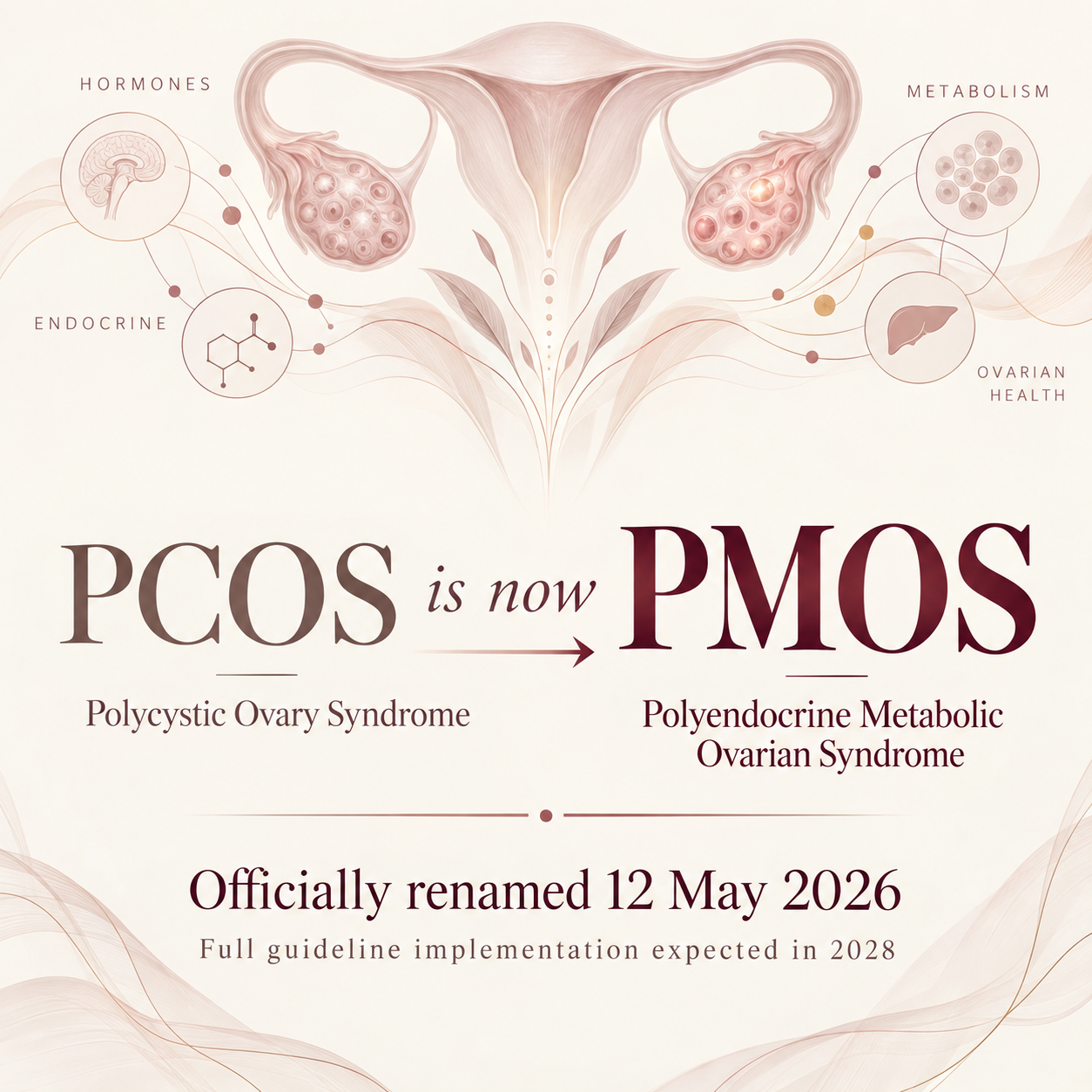
From PCOS to PMOS: Why Renaming Matters for Women’s Hormonal Health
If you’ve ever received a diagnosis of polycystic ovary syndrome (PCOS), you may have felt a mix of relief and confusion. Relief at finally having a name for irregular cycles, unwanted hair growth, acne, or weight struggles. Confusion because an ultrasound showed “cysts” that didn’t fully explain your fatigue, sugar cravings, or family history of diabetes. You’re not alone. Clinicians and researchers are increasingly recognizing that the name “PCOS” itself can be misleading—and a proposed shift toward PMOS (PolyMetabolic Ovary Syndrome) aims to better reflect the true nature of this common condition. This change is more than semantics. It has the potential to transform how we diagnose, treat, and empower women across the lifespan.
September 19, 2026
Why Some Women React to Progesterone in Hormone Replacement Therapy: An Evidence-Based Exploration
Hormone replacement therapy (HRT) is a cornerstone for managing menopausal symptoms like hot flashes, night sweats, and sleep disturbances, affecting up to 85% of women over 45 Mallhi et al., 2018. In women with an intact uterus, progesterone (or progestogens) is added to estrogen therapy to protect the endometrium from hyperplasia and cancer risk Hamoda, 2021. However, not all women tolerate progesterone well—some experience side effects like mood changes, bloating, breast tenderness, or fatigue. These reactions can lead to discontinuation of therapy, leaving symptoms unmanaged. In this post, we'll explore the evidence-based reasons behind these varied responses, drawing from functional medicine principles like networked physiology (e.g., interactions between endocrine, neuro, and immune systems) and individual upstream factors such as genetics and metabolism.
February 8, 2026
Supplements for Testosterone Replacement Therapy Side Effects in Women
Testosterone replacement therapy (TRT) is a common treatment for women with low testosterone levels, but it can cause unwanted side effects such as hair loss and acne 5 alpha reductase inhibitors and sexual side effects, 2021. While TRT can alleviate symptoms and improve quality of life, it is essential to consider supplements that may help mitigate these side effects.

February 1, 2026
Mitigating Testosterone Replacement Therapy Side Effects in Women: Hair Loss and Acne
Testosterone replacement therapy (TRT) is a common treatment for women with low testosterone levels, but it can cause unwanted side effects such as hair loss and acne Zitzmann et al., 2024. Understanding the underlying mechanisms of these side effects is crucial for developing effective mitigation strategies.
January 25, 2026
The Physiological Effects of Testosterone in Women
Testosterone plays a crucial role in women's health, including libido, bone density, muscle mass, and cognitive function R Davis, 2022. The hormone is produced in smaller amounts in women compared to men, but its effects are just as significant.

January 11, 2026
Optimal Probiotic Strains and Dosages for Endometriosis Treatment
Endometriosis is a complex and multifaceted disease that affects millions of women worldwide Atiqah Zakaria et al., 2024. While the exact causes of endometriosis are not yet fully understood, hormonal imbalances, genetic predisposition, and environmental factors are thought to contribute to its development (Xholli et al., 2023). Probiotics have been shown to have anti-inflammatory and immunomodulatory effects, and alterations in the gut microbiota have been associated with endometriosis Alia Norfuad et al., 2023.
January 4, 2026
Endometriosis and Fertility Concerns
Endometriosis is a complex and multifaceted disease that affects millions of women worldwide Kanellopoulos et al., 2022. One of the most significant concerns for women with endometriosis is its impact on fertility Bonavina & S Taylor, 2022. Endometriosis can cause infertility, and the mechanisms underlying this association are not yet fully understood Simopoulou et al., 2021.

December 21, 2025
Treatment Options for Endometriosis
Endometriosis is a complex and multifaceted disease that requires a comprehensive treatment approach Hussam Al Deen Al Hussaini et al., 2025. The primary goals of treatment are to alleviate symptoms, improve quality of life, and enhance fertility L Newmark et al., 2021.
December 4, 2025
Exploring Low Dose Naltrexone
Low-dose naltrexone (LDN) is a medication that has been gaining attention in recent years for its potential therapeutic benefits in various medical conditions. In this comprehensive guide, we will explore what LDN is, its pharmacological mechanism of action, its uses, benefits, risks, and potential side effects.

October 30, 2025
What is Endometriosis?
Endometriosis is a complex and multifactorial disease, and its exact causes are still not fully understood G Signorile et al., 2023. However, several factors are thought to contribute to its development, including hormonal imbalances, genetic predisposition, and environmental factors G Signorile et al., 2022.

October 10, 2025
Natural Remedies for Hormone Imbalances
Hormone imbalances can significantly impact a person's quality of life, causing symptoms such as mood swings, fatigue, weight gain, and skin issues. Although conventional treatments are often effective, many individuals prefer natural remedies to ease their symptoms. In this post, we examine the most effective natural remedies for hormone imbalances, supported by scientific evidence.

September 13, 2025
Understanding Leaky Gut Syndrome: A Patient's Guide
Leaky gut syndrome, also known as intestinal hyperpermeability, is a condition in which the lining of the small intestine becomes damaged, allowing toxins, undigested food particles, and other substances to pass through the gut wall and into the bloodstream (Compare et al., 2024). This can lead to a range of symptoms and health problems.
Explore Guides, Resources and Books by Dr Nirusha Kumaran

e-book by dr Nirusha Kumaran out now
Midlife Rebalanced®: Your Perimenopause Healing Guide
Reclaim your energy, hormones, metabolism, and confidence — without extreme diets or burnout.
The E-Book by Dr Nirusha Kumaran, out now on Amazon.

e-book by dr Nirusha Kumaran out august 2026
The Ultimate Guide to PMS: Understanding, Managing & Thriving
PMS isn’t just an annoying inconvenience, it’s your body’s way of telling you that something is out of balance. Your hormones, gut health, stress levels, and even your diet all play a role in how you feel before your period. But here’s the good news: once you understand what’s driving your symptoms, you can take back control.
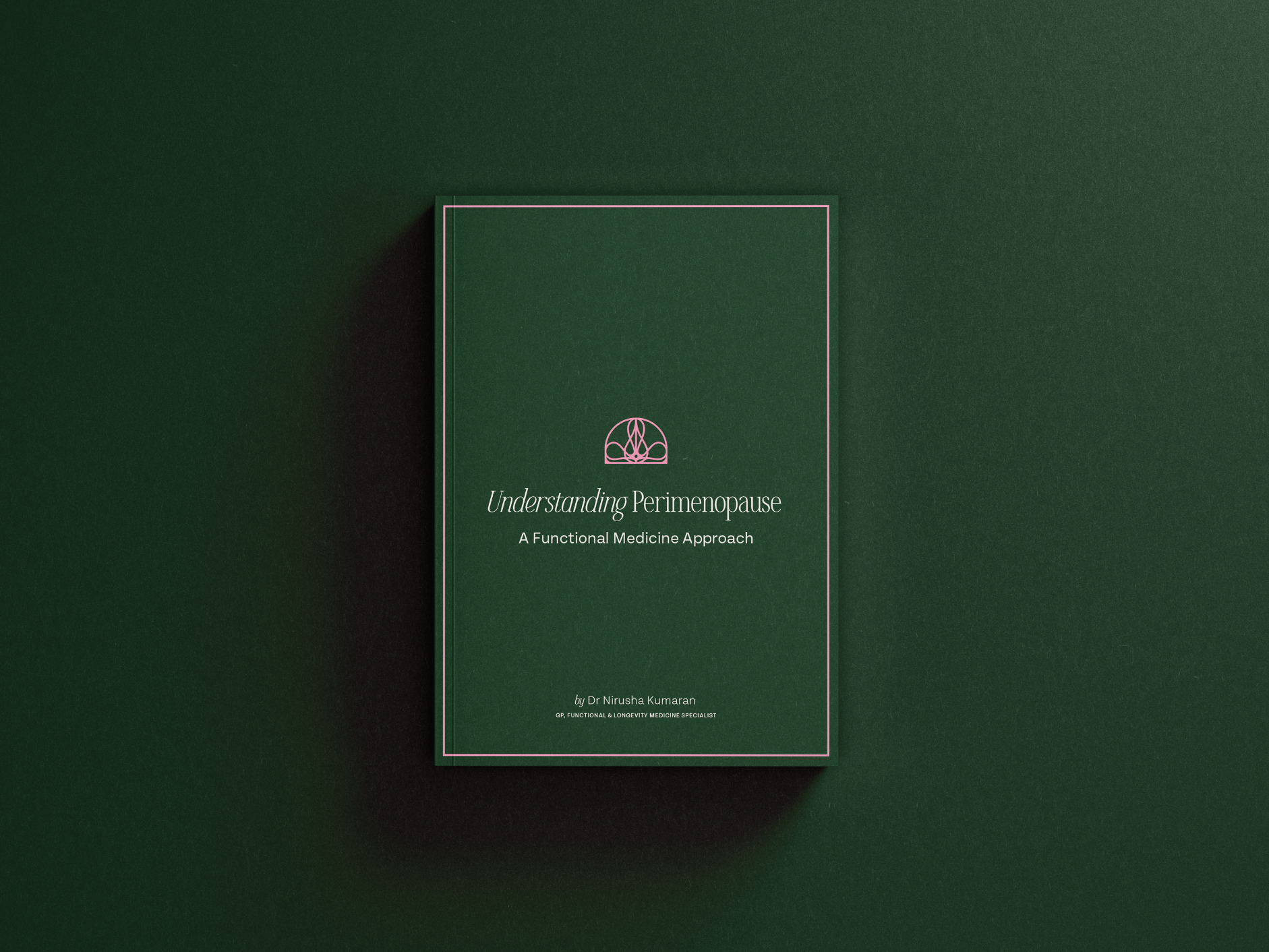
free guide by dr Nirusha Kumaran
Understanding Perimenopause: A Functional Medicine Approach
A practical, doctor-led guide explaining symptoms, testing options, treatment strategies and lifestyle adjustments to support hormone balance during perimenopause.
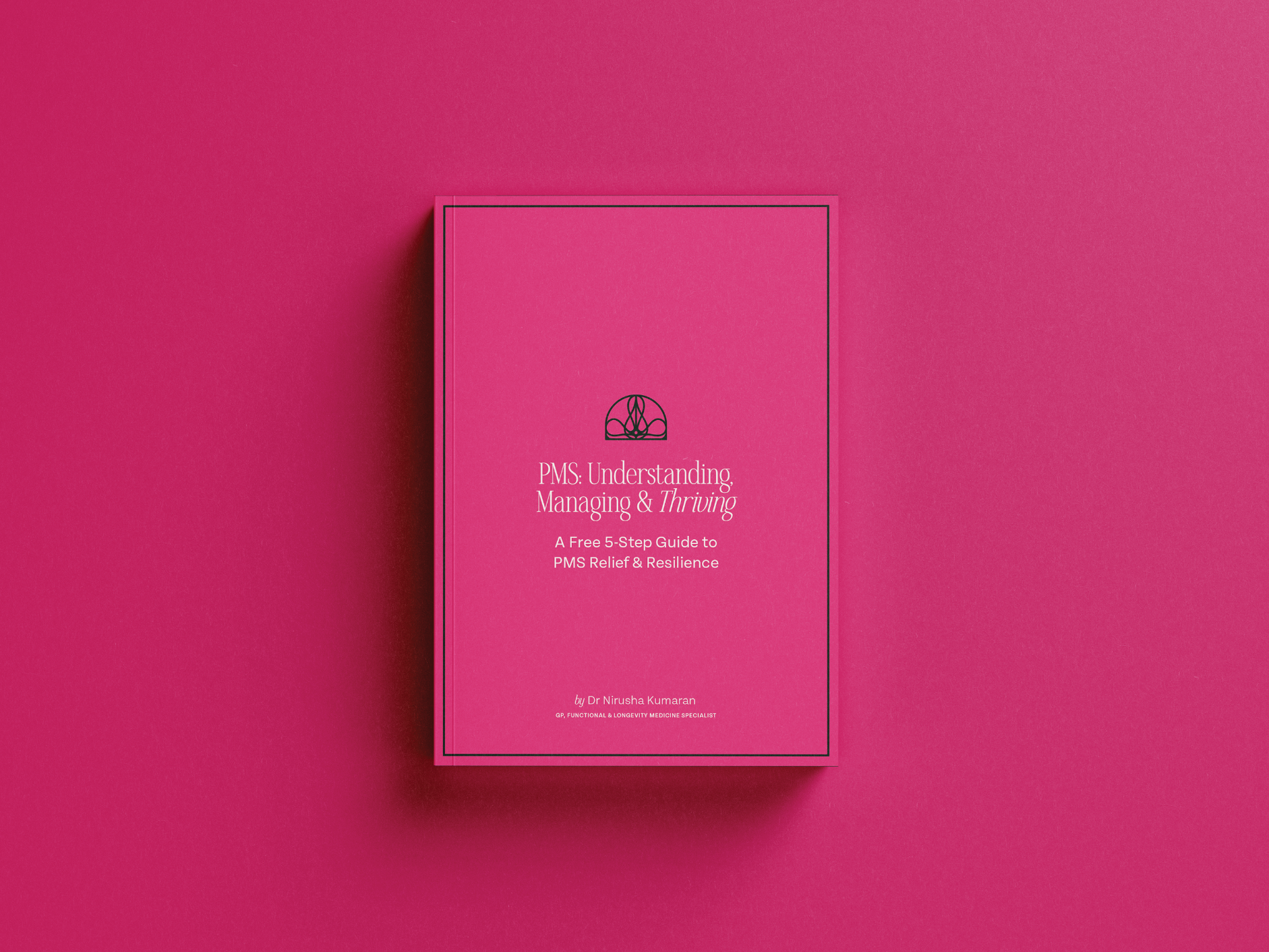
free guide by dr Nirusha Kumaran
PMS: Understanding, Managing & Thriving - A Free 5-Step Guide to PMS Relief & Resilience
A 5-step evidence-based guide detailing root causes of PMS, dietary and lifestyle strategies, and how personalised plans improve symptom control.





Speaking Engagements
Are you searching for a speaker who offers unique perspectives on Functional and Longevity Medicine, hormone health, and the benefits of root-cause healing? Whether it’s a podcast, health summit, medical conference, or wellness panel, Dr Nirusha provides insightful, science-based talks that both inspire and educate.

Subscribe to the latest updates and news from Dr Nirusha Kumaran

Thank you! You've been added to the mailing list.
You're now a part of a growing community of women looking to empower themselves with knowledge that helps them lead their 'pinkest' life.
Oops! Something went wrong while submitting the form.
.png)