


knowledge base: the blog
Why Some Women React to Progesterone in Hormone Replacement Therapy: An Evidence-Based Exploration

by Dr Nirusha Kumaran
September 19, 2026
The Role of Progesterone in HRT: A Quick Primer
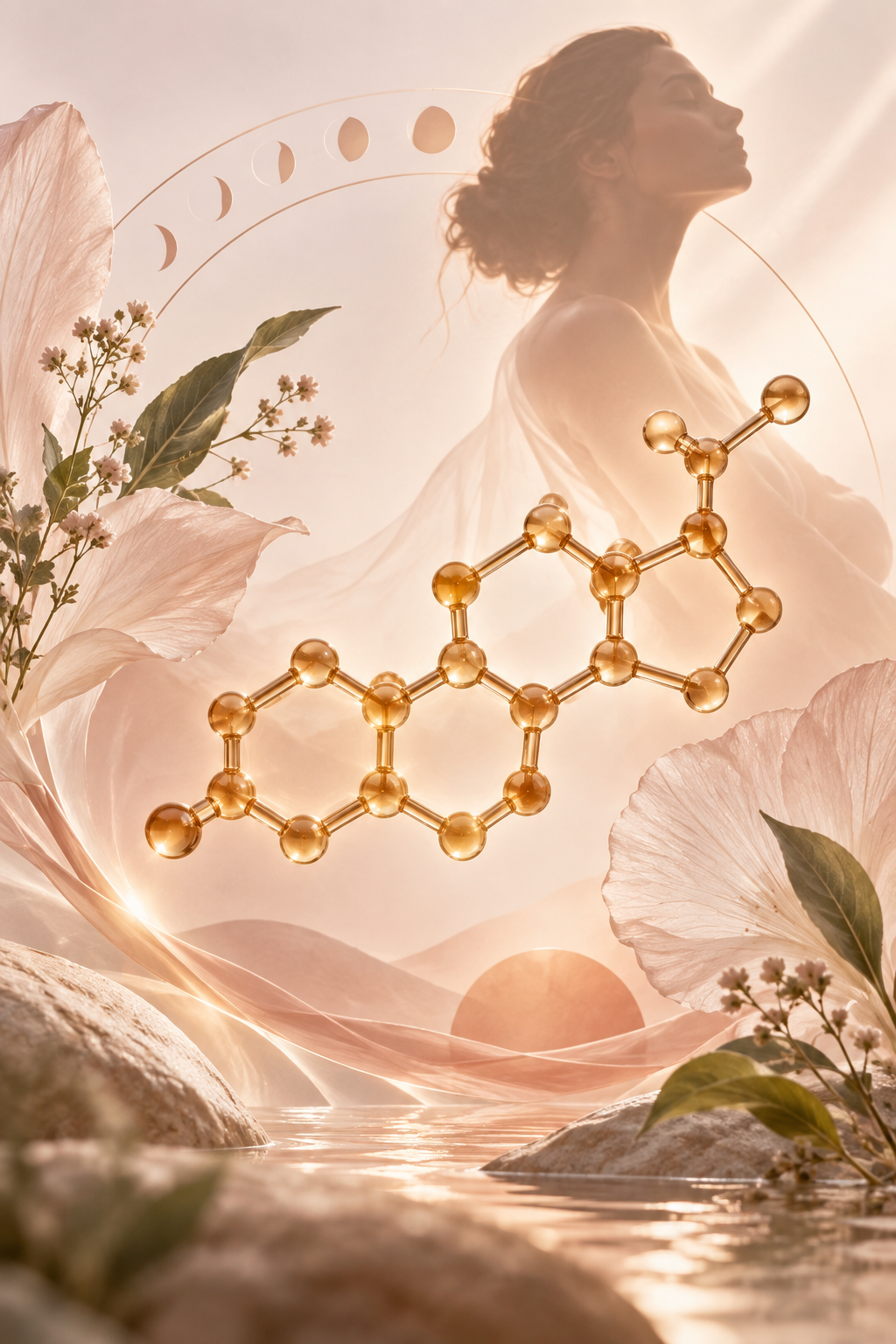
Progesterone, often used as micronisaed progesterone in bioidentical forms, mimics the natural hormone produced by the ovaries. It balances oestrogen's effects on the uterine lining and may offer cardiovascular and breast safety advantages over synthetic progestins (e.g., medroxyprogesterone acetate) Rodrigues & Gompel, 2020 Levy & Simon, 2024. Strong consensus from guidelines supports its use for up to seven years in symptomatic women under 60, with benefits outweighing risks for most Hamoda et al., 2020.
Yet, progesterone's effects extend beyond the uterus. It influences GABA receptors in the brain (promoting calm via neurosteroid metabolites like allopregnanolone), modulates inflammation, and interacts with estrogen receptors Schweizer-Schubert et al., 2021. This networked impact explains why reactions can manifest systemically—e.g., as anxiety (via altered neuro-endocrine signaling) or fluid retention (via metabolic shifts).
Key Mechanisms Behind Progesterone Reactions
Individual responses to progesterone stem from biological variability, not uniform "intolerance." Evidence points to several interconnected factors:
1. Genetic and Receptor Sensitivity Variations
- Progesterone Receptor (PR) Polymorphisms: Some women have genetic variants in the PR gene that alter binding affinity or downstream signaling. For instance, preliminary evidence links PR variants to heightened sensitivity, potentially amplifying mood or somatic effects during hormonal transitions Kadivnik et al., 2022. This is a mechanistic proxy from studies on reproductive disorders, where PR dysregulation affects endometrial and neural responses (flagged as extrapolated from pregnancy-related data).
- Oestrogen-Progesterone Imbalance: In perimenopause, fluctuating oestrogen can narrow the "thermoneutral zone," exacerbating vasomotor symptoms, while progesterone addition may disrupt this if receptors are already sensitized Mallhi et al., 2018. Moderate evidence from cohort studies shows women with prior mood disorders (e.g., premenstrual dysphoric disorder) react more due to GABA-A receptor complex sensitivity to allopregnanolone Schweizer-Schubert et al., 2021.
2. Metabolic and Hormonal Interactions
- Progestogen Type Matters: Synthetic progestins (vs. micronised progesterone) carry higher risks of side effects like thrombosis or mood instability due to androgenic or glucocorticoid-like actions LaVasseur et al., 2022 Rodrigues & Gompel, 2020. Micronised progesterone has a better metabolic profile, with lower breast cancer promotion (strong consensus from reviews) Gompel & Plu-Bureau, 2018, but even it can cause drowsiness or bloating via rapid metabolism to sedative metabolites.
- Dose and Route Effects: Oral progesterone undergoes first-pass liver metabolism, increasing neurosteroid levels that may sedate some women but agitate others with low baseline GABA activity Schweizer-Schubert et al., 2021. Transdermal or vaginal routes minimise this, reducing reactions (emerging evidence from observational data).
- Upstream Endocrine Disruptors: Functional medicine highlights how environmental factors (e.g., xenoestrogens) or nutrient deficiencies (e.g., B vitamins for methylation) impair progesterone clearance, leading to buildup and symptoms like fatigue.
3. Networked Physiological Influences
- Neuro-Immune-Endocrine Axis: Progesterone modulates inflammation and stress responses via RANK/RANKL pathways, but in sensitive women, it may indirectly stimulate immune shifts, mimicking autoimmune flares (mechanistic proxy from breast cancer models) Barele et al., 2021. This ties into broader menopausal inflammaging, where progesterone's anti-apoptotic effects on breast tissue could theoretically heighten tenderness in prone individuals Bennink et al., 2023.
- Circadian and Lifestyle Factors: Progesterone peaks align with sleep cycles; disruptions (e.g., from shift work) amplify reactions via autonomic dysregulation. Moderate evidence links higher BMI or smoking to poorer tolerance, as they alter hormone clearance Genazzani et al., 2021.
Evidence from Clinical Studies: Not All Women Are the Same
Reanalysis of the Women's Health Initiative (WHI) shows risks like breast cancer are formulation-specific and timing-dependent—e.g., combined estrogen-progestin increases risk slightly after years of use, but micronized progesterone may not Tan & Dayu, 2022Levy & Simon, 2024. A 2021 review found progesterone safer for cardiovascular health than progestins, yet 10–20% of users report mood effects, often resolving with dose adjustment Gersh et al., 2021.
In functional medicine terms, these reactions reflect upstream causality: e.g., oxidative stress from estrogen dominance pre-HRT sensitizes neural pathways, making progesterone's calming effects feel overwhelming Schweizer-Schubert et al., 2021. Prognosis is good—most reactions are transient, and switching to cyclic dosing (12–14 days/month) reduces issues while maintaining protection Hamoda, 2021.
Functional Medicine Approach: Personalising HRT
From a systems biology lens, reactions signal imbalances in the immune-neuro-endocrine-metabolic network. Testing (e.g., hormone panels, DUTCH test for metabolites) can identify sensitivities. Interventions include:
- Lifestyle Tweaks: Stress reduction (e.g., mindfulness) buffers GABA effects; anti-inflammatory diets support detox.
- Nutritional Cofactors: Magnesium and B6 aid progesterone metabolism (moderate evidence from menstrual cycle studies).
- Alternatives: If reactions persist, consider estrogen-only (post-hysterectomy) or non-hormonal options like SSRIs for vasomotor symptoms Mallhi et al., 2018. For breast safety, progesterone's role in proliferation is debated but linked to lifetime ovulatory cycles—HRT tumors may arise from pre-existing lesions Bennink et al., 2023.
Final Thoughts: Empowering Informed Choices
While HRT with progesterone is safe and effective for most (strong consensus), reactions in some women highlight the need for individualized care. Benefits like reduced fracture risk and improved quality of life often outweigh transient side effects when tailored properly Hamoda et al., 2020. Consult a functional medicine provider for personalised testing and adjustments—early intervention can prevent discontinuation and optimize menopausal health.
General knowledge note: Claims on nutritional cofactors draw from undisputed basics; no specific RCTs for HRT reactions found. For deeper dives, review cited sources via PubMed.
References
Mallhi, T., Khan, Y., & al., A. K. E. (2018). Managing hot flushes in menopausal women: a review.. {'name': 'Journal Of The College Of Physicians And Surgeons--Pakistan : JCPSP', 'pages': ' 460-465 ', 'volume': 28 6}. https://doi.org/10.29271/jcpsp.2018.06.460
Barele, M. V., Heemskerk-Gerritsen, B., & al., Y. L. E. (2021). Estrogens and progestogens in triple negative breast cancer: do they harm?. Cancers. https://doi.org/10.3390/cancers13112506
Levy, B. & Simon, J. A. (2024). A contemporary view of menopausal hormone therapy. Obstetrics & Gynecology. https://doi.org/10.1097/AOG.0000000000005553
Hamoda, H., Panay, N., & al., H. P. E. (2020). The british menopause society & women’s health concern 2020 recommendations on hormone replacement therapy in menopausal women. Post Reproductive Health. https://doi.org/10.1177/2053369120957514
Gersh, F. L., O’Keefe, J., & Lavie, C. (2021). Postmenopausal hormone therapy for cardiovascular health: the evolving data. Heart. https://doi.org/10.1136/heartjnl-2019-316323
LaVasseur, C., Neukam, S., & al., T. K. E. (2022). Hormonal therapies and venous thrombosis: considerations for prevention and management. Research And Practice In Thrombosis And Haemostasis. https://doi.org/10.1002/rth2.12763
Rodrigues, M. A. H. & Gompel, A. (2020). Micronized progesterone, progestins, and menopause hormone therapy. Women & Health. https://doi.org/10.1080/03630242.2020.1824956
Hamoda, H. (2021). British menopause society tools for clinicians: progestogens and endometrial protection. Post Reproductive Health. https://doi.org/10.1177/20533691211058030
Tan, D. & Dayu, A. R. B. (2022). Menopausal hormone therapy: why we should no longer be afraid of the breast cancer risk. Climacteric. https://doi.org/10.1080/13697137.2022.2035711
Levy, B. & Simon, J. A. (2024). A contemporary view of menopausal hormone therapy. Obstetrics & Gynecology. https://doi.org/10.1097/AOG.0000000000005553
Barele, M. V., Heemskerk-Gerritsen, B., & al., Y. L. E. (2021). Estrogens and progestogens in triple negative breast cancer: do they harm?. Cancers. https://doi.org/10.3390/cancers13112506
Genazzani, A., Monteleone, P., & al., A. G. E. (2021). Hormone therapy in the postmenopausal years: considering benefits and risks in clinical practice.. Human Reproduction Update. https://doi.org/10.1093/humupd/dmab026
Schweizer-Schubert, S., Gordon, J., & al., T. E. E. (2021). Steroid hormone sensitivity in reproductive mood disorders: on the role of the gabaa receptor complex and stress during hormonal transitions. Frontiers In Medicine. https://doi.org/10.3389/fmed.2020.479646
Bennink, H. C. C., Schultz, I., & al., M. S. E. (2023). Progesterone from ovulatory menstrual cycles is an important cause of breast cancer. Breast Cancer Research : BCR. https://doi.org/10.1186/s13058-023-01661-0
Kadivnik, M., Kralik, K., & al., A. M. E. (2022). Progesterone receptor genetic variants in pregnant women and fetuses as possible predictors of spontaneous premature birth: a preliminary case–control study. Journal Of Obstetrics And Gynaecology Research. https://doi.org/10.1111/jog.15194
Bennink, H. C. C., Schultz, I., & al., M. S. E. (2023). Progesterone from ovulatory menstrual cycles is an important cause of breast cancer. Breast Cancer Research : BCR. https://doi.org/10.1186/s13058-023-01661-0
Gompel, A. & Plu-Bureau, G. (2018). Progesterone, progestins and the breast in menopause treatment. Climacteric. https://doi.org/10.1080/13697137.2018.1476483
Levy, B. & Simon, J. A. (2024). A contemporary view of menopausal hormone therapy. Obstetrics & Gynecology. https://doi.org/10.1097/AOG.0000000000005553
Rodrigues, M. A. H. & Gompel, A. (2020). Micronized progesterone, progestins, and menopause hormone therapy. Women & Health. https://doi.org/10.1080/03630242.2020.1824956






Speaking Engagements
Are you searching for a speaker who offers unique perspectives on Functional and Longevity Medicine, hormone health, and the benefits of root-cause healing? Whether it’s a podcast, health summit, medical conference, or wellness panel, Dr Nirusha provides insightful, science-based talks that both inspire and educate.


.png)